
 VISIT OUR BLOG
 CONTACT US


Key Takeaways
-
GRP vs Cast Iron: Glass reinforced plastic (GRP) offers a lightweight alternative to traditional cast iron and concrete infrastructure, reducing the need for manual handling.
- Replacing heavy legacy assets with GRP can help lower installation, maintenance, and equipment hire costs.
- Lightweight GRP solutions reduce workplace risks associated with heavy lifting and manual handling, supporting UK site managers' duties under the Manual Handling Operations Regulations 1992.
- GRP offers long-term durability through corrosion resistance and reduced maintenance requirements.
- Retrofit projects using GRP can improve operational efficiency without the disruption of full infrastructure replacement, minimising costly downtime.
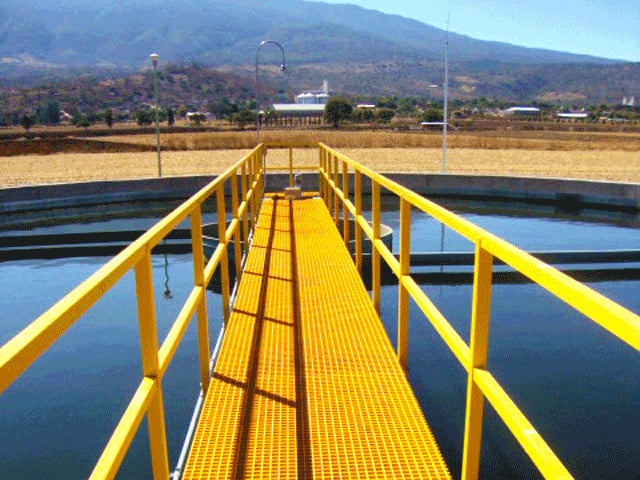
The hidden cost of heavy infrastructure
For decades, heavy materials such as cast iron and concrete have been widely used across industrial, commercial, and infrastructure applications. Their strength and durability made them a natural choice for demanding environments.
However, the true cost of these materials extends beyond the initial purchase price. Every time a maintenance team needs additional personnel, lifting equipment, or a crane to move a heavy component, operational efficiency, project budgets, and workplace safety are affected.
For procurement teams, the challenge is no longer simply selecting a material that performs its intended function. The focus has shifted towards understanding total lifecycle value, including installation costs, maintenance requirements, associated downtime, and health and safety implications.
For health and safety officers, reducing unnecessary manual handling risks has become a key priority. Removing the need for workers to handle heavy components repeatedly can make a measurable difference to workplace safety.
Fibergrate's moulded gratings, access systems, stair solutions, and structural profiles help organisations modernise ageing assets while reducing handling requirements and lifecycle costs. Solutions such as Fibergrate’s lightweight, corrosion-resistant moulded GRP products enable organisations to replace heavy legacy materials with safer, longer-lasting alternatives, and modernise existing assets more efficiently.
GRP vs cast iron: Understanding the real cost difference
When comparing GRP and cast iron, the initial purchase price should not be the only factor in the decision-making process.
A more accurate assessment should consider the total cost of ownership (TCO), from installation through to long-term maintenance and longevity.
| Consideration | Cast Iron | Concrete | GRP |
| Weight | Heavy and often requires mechanical assistance | Extremely heavy, requires specialist lifting equipment | Lightweight and easier to handle |
| Installation | Greater labour and equipment requirements | Complex, time-consuming, and labor-intensive | Faster and simpler installation |
| Manual handling | Increased lifting risk | High risk of manual handling injury | Reduced handling requirements |
| Corrosion resistance | Can deteriorate over time | Prone to cracking, spalling, and chemical degradation | Highly resistant to corrosion |
| Maintenance | Potentially higher upkeep costs | Frequent repairs and ongoing maintenance cycles needed | Lower maintenance demands |
| Lifecycle value | Greater operational burden | High overall lifetime cost due to replacement and downtime | Reduced long-term costs |
| Manual handling risk | Heavier components require additional manual handling and lifting risk controls | Significant manual handling hazard requiring strict site lifting controls | Lightweight components can support safer handling and HSE risk reduction measures |
While cast iron remains suitable for certain applications, many organisations are reassessing whether its weight and maintenance demands continue to provide the best commercial outcome.
For procurement professionals, infrastructure decisions must be justified through measurable business benefits.
Replacing cast iron with GRP can deliver value across several areas.
Reduced installation costs
Heavy components often require additional resources during installation, including:
-
Multiple workers for manual handling
- Lifting equipment
- Specialist contractors
- Additional time on site
Because GRP products are significantly lighter than cast iron alternatives, installation can often be completed more quickly and with fewer resources.
Reducing installation complexity helps organisations control project costs while minimising disruption.
Lower maintenance requirements
Infrastructure operating in challenging environments, such as food, beverage, and chemical facilities, can be exposed to:
-
Moisture
- Chemicals
- Corrosive conditions
- Temperature changes
GRP naturally resists corrosion and does not degrade like metal alternatives; the resin system can be selected for the chemicals and conditions on site. This can reduce the need for repairs, replacements, and ongoing maintenance activity.
Over an asset's lifespan, these savings can significantly improve return on investment.
Reduced operational disruption
Maintenance activities often require access restrictions, equipment shutdowns, or additional site management.
Lightweight GRP solutions simplify installation and replacement processes, helping businesses reduce downtime and maintain productivity.
The most commercially effective solution is not always the material with the lowest upfront cost. It is the solution that delivers the greatest value throughout its working life.
Stopping the heavy lift: Improving workplace safety with GRP
The move towards lightweight infrastructure is not only a financial decision; it is also a workplace safety improvement.
Manual handling remains one of the most common causes of workplace injuries in Great Britain. According to the Health and Safety Executive (HSE), handling, lifting, or carrying accounted for 17% of all employer-reported non-fatal injuries to employees in 2024/25, making it the second most common type of reported non-fatal injury to employees.
A single lifting task may appear routine, but repeated exposure over time can increase the likelihood of strains, injuries, and lost working hours.
Replacing heavy cast iron components with lightweight GRP alternatives helps reduce these risks by:
-
Minimising manual lifting requirements
- Reducing the number of people needed for handling tasks
- Limiting reliance on lifting equipment
- Improving access and maintenance efficiency
The benefit of GRP vs. cast iron is simple: every time a worker does not need to manually move a heavy component or wait for specialist lifting equipment, an unnecessary risk has been removed from the process.
For health and safety teams, this supports a proactive approach to risk reduction. For procurement teams, it represents a practical investment in safer and more efficient operations.
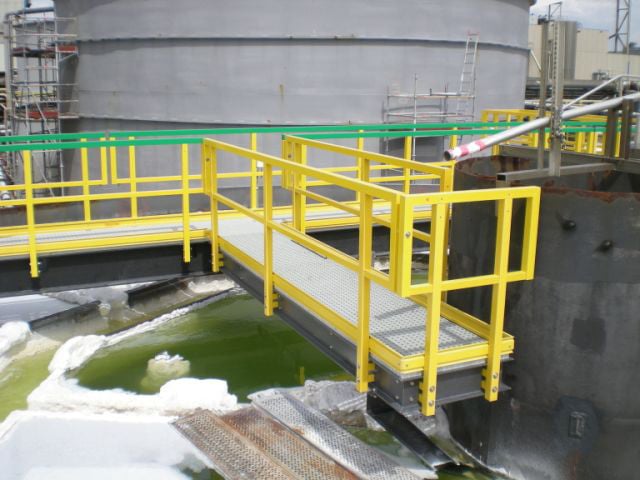
Replacing concrete with GRP: A smarter retrofit approach
As ageing infrastructure requires maintenance or replacement, many organisations are exploring alternatives to traditional concrete. Replacing concrete with GRP can offer a practical solution for retrofit projects where weight reduction, corrosion resistance, and installation efficiency are key considerations.
Addressing deteriorating concrete infrastructure
Over time, concrete structures can develop cracks, spalling, and surface deterioration, particularly in industrial environments exposed to moisture, chemicals, and heavy use. These issues can lead to recurring repair cycles, increased maintenance costs, and operational disruption.
For ageing walkways, platforms, and access areas, replacing deteriorated concrete elements with GRP can reduce the need for repeated repairs and help organisations manage long-term maintenance requirements.
Reducing weight and installation complexity
Concrete components can be heavy and difficult to remove or replace, often requiring additional labour and lifting equipment. Lightweight GRP alternatives can simplify handling and installation, helping contractors reduce the time and resources required for retrofit work.
Where existing support structures are suitable, contractors can install GRP components without extensive structural modifications, enabling targeted upgrades rather than complete infrastructure replacement.
Improving long-term maintenance efficiency
Unlike reinforced concrete, which can be affected by reinforcement corrosion and associated cracking or spalling, GRP offers corrosion-resistant properties suited to demanding environments.
GRP solutions can be considered for applications including:
-
Industrial walkways and access platforms
- Stair treads and flooring
- Drainage and access covers
- Selected structural components
Rather than rebuilding entire structures, organisations can consider targeted upgrades using GRP stair treads, grating, and structural profiles.
With appropriate structural assessment and specification, replacing concrete with GRP can help businesses modernise ageing infrastructure, reduce installation complexity, and manage ongoing maintenance demands.
Why GRP is becoming the material of choice for retrofit projects
The future of infrastructure improvement is not always about replacing everything. Increasingly, it is about making targeted improvements that deliver measurable benefits.
GRP supports this approach by offering:
Lightweight performance
GRP combines strength with reduced weight, making it easier to transport, install, and maintain.
Long-term durability
Resistance to corrosion, chemicals, and harsh environments makes GRP suitable for demanding industrial applications.
Improved safety
Reducing heavy lifting requirements helps organisations create safer working environments.
Commercial efficiency
Lower installation and maintenance needs improve lifecycle value.
For organisations reviewing ageing assets, GRP represents a practical way to modernise infrastructure without unnecessary cost or disruption.
Moving beyond heavy legacy thinking
The decision between GRP, concrete and cast iron is no longer simply a comparison of materials. It is a decision about safety, efficiency, and long-term value.
Heavy legacy assets can create hidden costs through additional labour requirements, maintenance demands, and workplace risks.
By replacing these materials with lightweight GRP alternatives, organisations can reduce operational pressures while creating safer and more efficient working environments.
The retrofit revolution is not about replacing infrastructure for the sake of change. It is about making smarter choices that benefit businesses, workers, and future operations.
Every avoided heavy lift represents a safer workplace and a more efficient investment.
Why choose Fibergrate UK for GRP solutions?
Selecting the right material is only part of a successful retrofit project. Working with an experienced GRP specialist helps ensure replacement solutions are specified to meet the demands of each application.
Fibergrate UK offers a range of lightweight, corrosion-resistant solutions designed to support safer, more efficient industrial environments. From GRP stair treads and trench covers to certified composite manhole covers, our products help organisations replace heavy legacy components, reduce manual handling, and simplify ongoing maintenance.
With expertise across GRP products and applications, our team can help you identify suitable alternatives to traditional materials and evaluate their long-term operational benefits.
Planning to replace ageing cast iron or concrete infrastructure? Contact the Fibergrate UK team to discuss your retrofit requirements and explore the right GRP solutions for your project.
Frequently Asked Questions
Is GRP a better alternative to cast iron?
GRP can be a more practical alternative to cast iron in many applications where weight reduction, corrosion resistance, and ease of installation are priorities. While cast iron remains suitable for some heavy-duty applications, GRP provides durability with significantly reduced weight, helping businesses lower handling risks and improve operational efficiency.
What are the cost benefits of replacing cast iron with glass reinforced plastic?
The cost benefits of glass reinforced plastic vs cast iron extend beyond the initial material cost. For example, replacing multiple cast iron access covers with GRP products may eliminate the need for crane hire, reduce installation time, and require fewer personnel during maintenance activities.
How does GRP improve workplace safety?
GRP improves workplace safety by reducing the risks associated with moving and installing heavy components. Its lightweight properties mean fewer manual handling tasks, less reliance on lifting equipment, and reduced exposure to injuries caused by lifting heavy or awkward materials.
Can GRP be used to replace concrete infrastructure?
In some applications, yes, GRP can replace concrete in applications such as walkways, platforms, and access covers, subject to structural assessment. Its strength, durability, and corrosion resistance make it suitable for environments where traditional materials may create maintenance or handling challenges.
How does GRP reduce lifecycle costs compared with traditional materials?
GRP can reduce lifecycle costs through lower installation requirements, reduced maintenance needs, and longer service life. Unlike metal alternatives, GRP resists corrosion and degradation in many harsh environments, helping organisations avoid frequent repairs and replacements.