WHERE TO BUY
 VISIT OUR BLOG
 CONTACT US


Rail platforms and other transportation facilities are constantly exposed to harsh weather,...
Rail platforms and other transportation facilities are constantly exposed to harsh weather, de-icing salts, and chemical runoff, conditions that accelerate corrosion in traditional steel components. Over time, that corrosion poses safety risks, causes unscheduled downtime, and leads to costly maintenance. Fibergrate’s FRP grating offers a long-term solution.
Engineered to resist rust, rot, and chemical damage, FRP products maintain their strength and appearance in even the most demanding transit environments - helping public transit systems operate safely, efficiently, and without interruption.
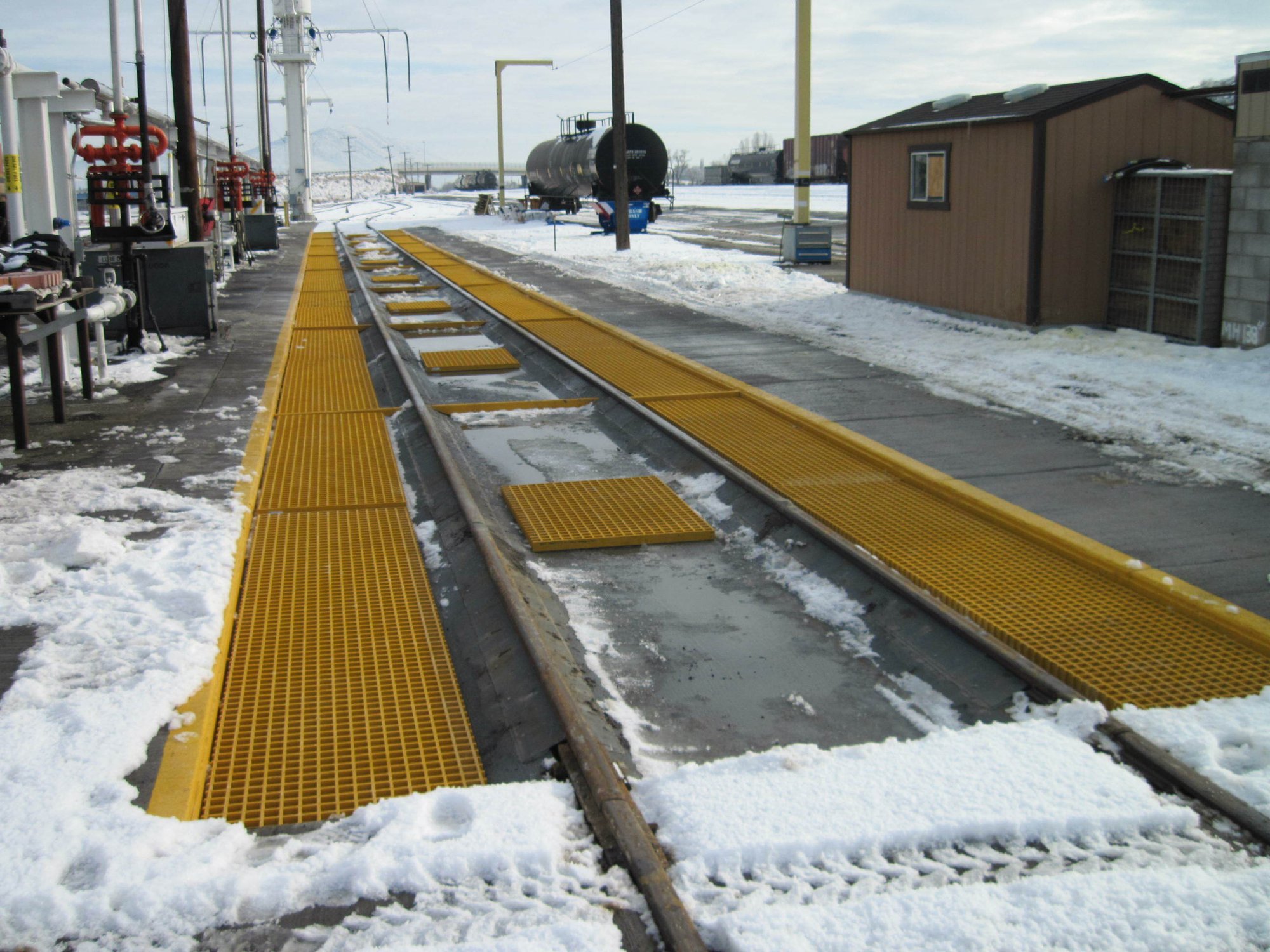
Molded FRP grating on a railroad
Strength That Moves Transportation Infrastructure Forward: FRP vs. Steel
Transit infrastructure demands materials that can withstand both heavy traffic and harsh conditions. FRP grating offers steel-like strength at up to 75% less weight, enabling easier installation and reduced load on structures.
Unlike steel, FRP does not require coatings or galvanizing to resist corrosion. It stands up to moisture, salt, and de-icing chemicals, commonly found in rail, bridge, and airport environments. Each grating surface made from FRP is engineered and tested to meet or exceed steel load standards, delivering dependable performance without the recurring cost of repainting or replacing corroded metal.
Durable Construction Materials: How FRP Grating Delivers Long Life
FRP grating’s high strength-to-weight ratio makes it ideal for elevated platforms, maintenance decks, stairs, and walkways as it provides excellent impact resistance and mechanical durability, even in high-traffic public areas.
Additionally, some of Fibergrate’s proprietary resin systems offer low flame spread and self-extinguishing properties, which help meet stringent fire safety codes. Transit facilities, from rail platforms to airport maintenance zones, rely on FRP to reduce downtime and extend the service life of their assets. This longevity minimizes material replacement and repair interruptions, thereby improving reliability for both operators and passengers.
Corrosion-Resistant Grating: Built for Transportation Environments
Public transportation infrastructure is constantly exposed to harsh elements. FRP grating performs reliably in airports, bridges, rail platforms, and transit walkways, even in areas exposed to salt, fuels, and water runoff.

Stair tread covers with non-slip grit surface
Fibergrate grating can be customized with a grit surface that helps prevent slips, even when the platform is wet or oily. This non-slip coating keeps walkways and stairs safer for crews and passengers, while withstanding years of heavy use without requiring extra maintenance.
Heavy-Duty FRP Grating for Transit and Transportation Infrastructure
Fibergrate’s heavy-duty FRP grating line includes high-load configurations designed for rail platforms, bridge catwalks, airport walkways, and trench covers. The open-grid design allows adequate drainage, while the anti-slip surface provides secure footing in wet or icy conditions.
FRP grating, compared to steel, balances load capacity with reduced weight, simplifying installation and minimizing maintenance without compromising performance. For public infrastructure, this combination of strength and reliability translates into long-term safety and cost efficiency.
Safety and Functional Advantages of Corrosion-Resistant Grating
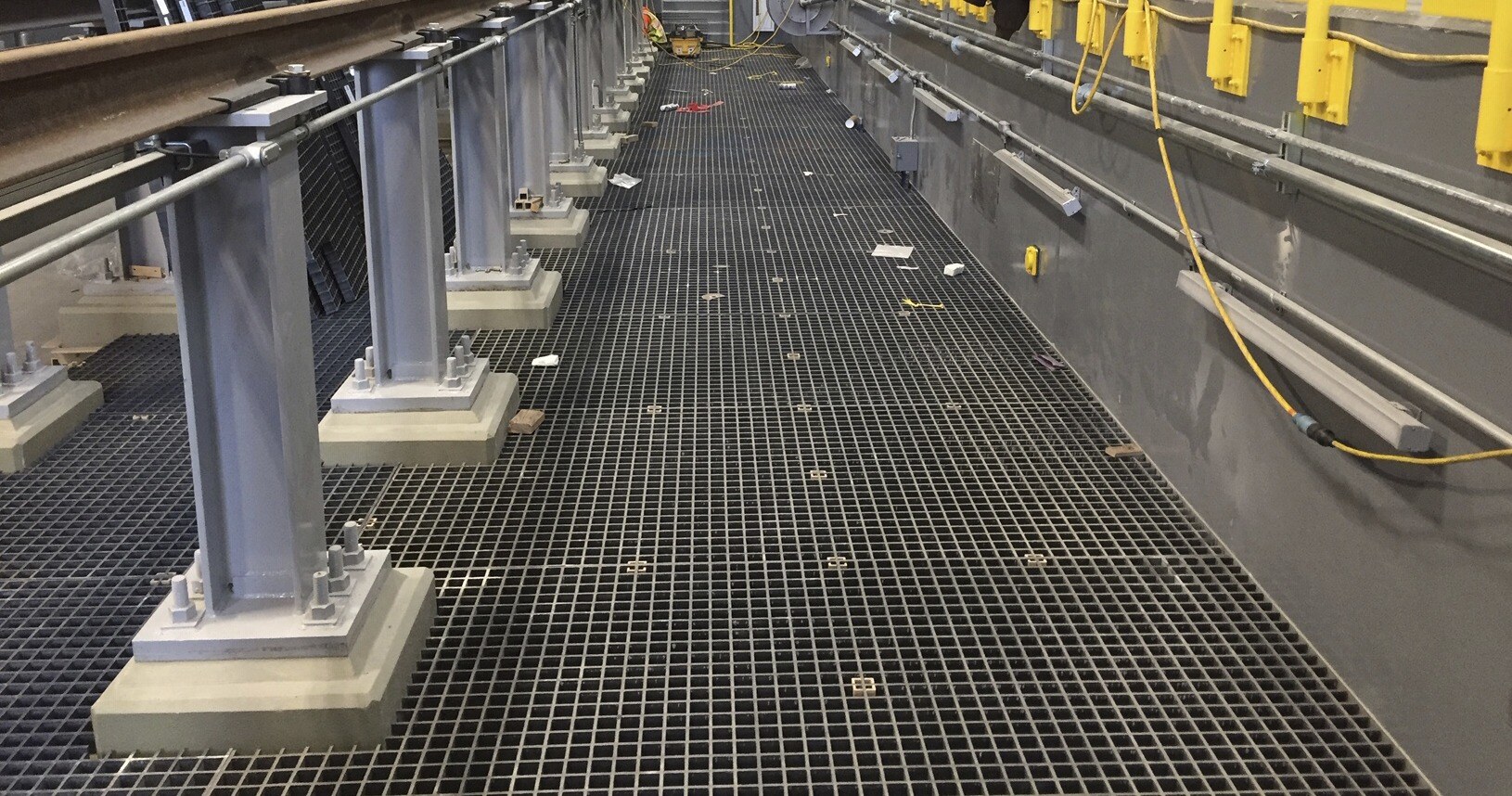
FRP grating on a Metra walkway
FRP corrosion-resistant grating contributes to safer, more accessible transit facilities in multiple ways:
- Slip resistance in high-traffic wet or oily environments
- Built-in drainage and ventilation through open-grid designs
- Consistent traction and color stability over years of use
These qualities make FRP ideal for stair treads, walkways, and service platforms across rail, aviation, and bridge applications - improving both safety and visual uniformity for the public.
Case Study: FRP Walkway System at a Railroad Freight Yard
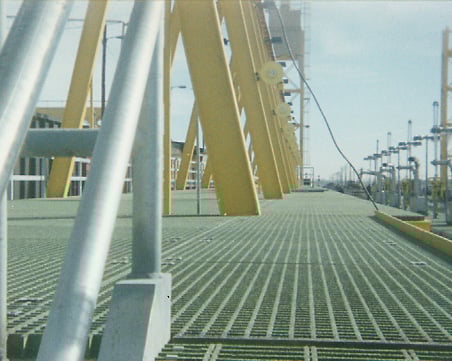
Green molded grating at a railroad freight yard
At the Union Pacific Railroad’s freight yard in North Platte, Nebraska, engineers required a walkway system that could withstand exposure to oil, fuel, and constant vibration. Traditional steel grating had proven unsafe and costly to maintain, becoming slick under diesel residue and prone to corrosion.
Fibergrate® molded grating was selected to replace steel walkways throughout the facility. The grit-top surface provided long-lasting slip resistance, while the corrosion-resistant resin system ensured reliable performance in harsh, high-traffic conditions.
During operation, a 1,200-pound crane cab accidentally fell onto a section of the newly installed grating. The steel I-beam beneath was bent several inches and required replacement; yet, the FRP panels remained structurally sound, showing only minor surface marks.
Years later, the grating continues to deliver dependable traction and strength in one of the most demanding environments in the transportation sector, illustrating why Fibergrate products are trusted for long-term FRP durability and worker safety.
Engineered Strength That Lasts Decades
Fibergrate FRP grating offers a durable, corrosion-resistant, and low-maintenance alternative to steel in transportation infrastructure. With decades of proven performance in airports, rail platforms, and bridge walkways, FRP products deliver lasting value through lower lifecycle costs and enhanced safety.
Contact Fibergrate to discuss your project specifications and learn how our engineered FRP solutions can help your transit facilities perform reliably for years to come.
FAQ
What is the expected lifespan of fiberglass grating?
Depending on the environment, Fiberglass grating can provide reliable service for several decades with minimal upkeep.
Can FRP grating replace steel in all environments?
Yes, FRP grating can replace steel in most structural and walkway applications. It is particularly well-suited for corrosive or outdoor conditions where steel would degrade over time.
How does maintenance differ between FRP and traditional gratings?
FRP requires only periodic cleaning and inspection, while metal alternatives often need recoating or replacement due to rust and corrosion.